Flint Bay
Year
Location
River Dee, Oakenholt
Type
Residential
Status
Completed
Construction
Tyrell Building Co
Flint Bay
A flexible coastal retreat shaped by light, landscape and movement.
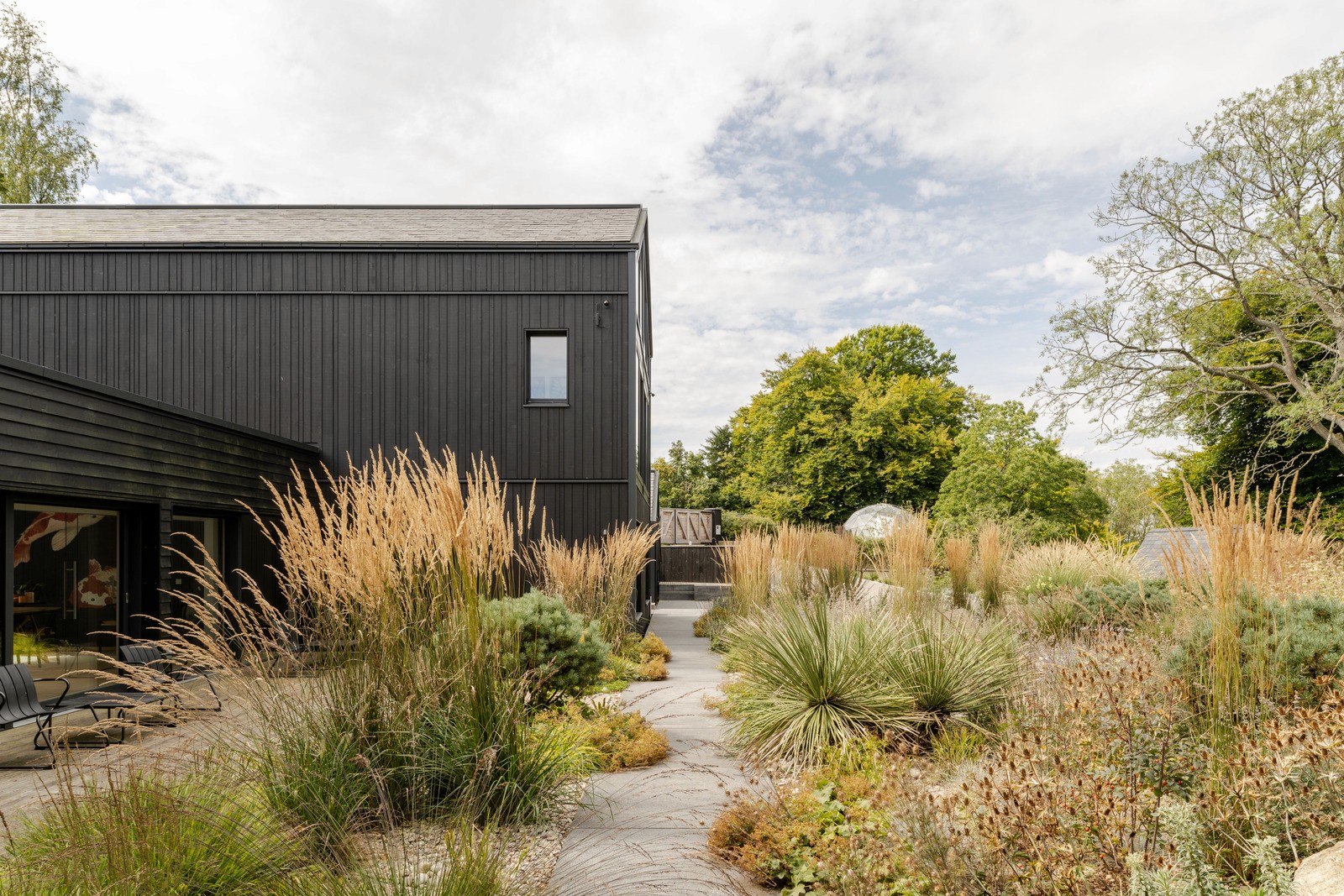
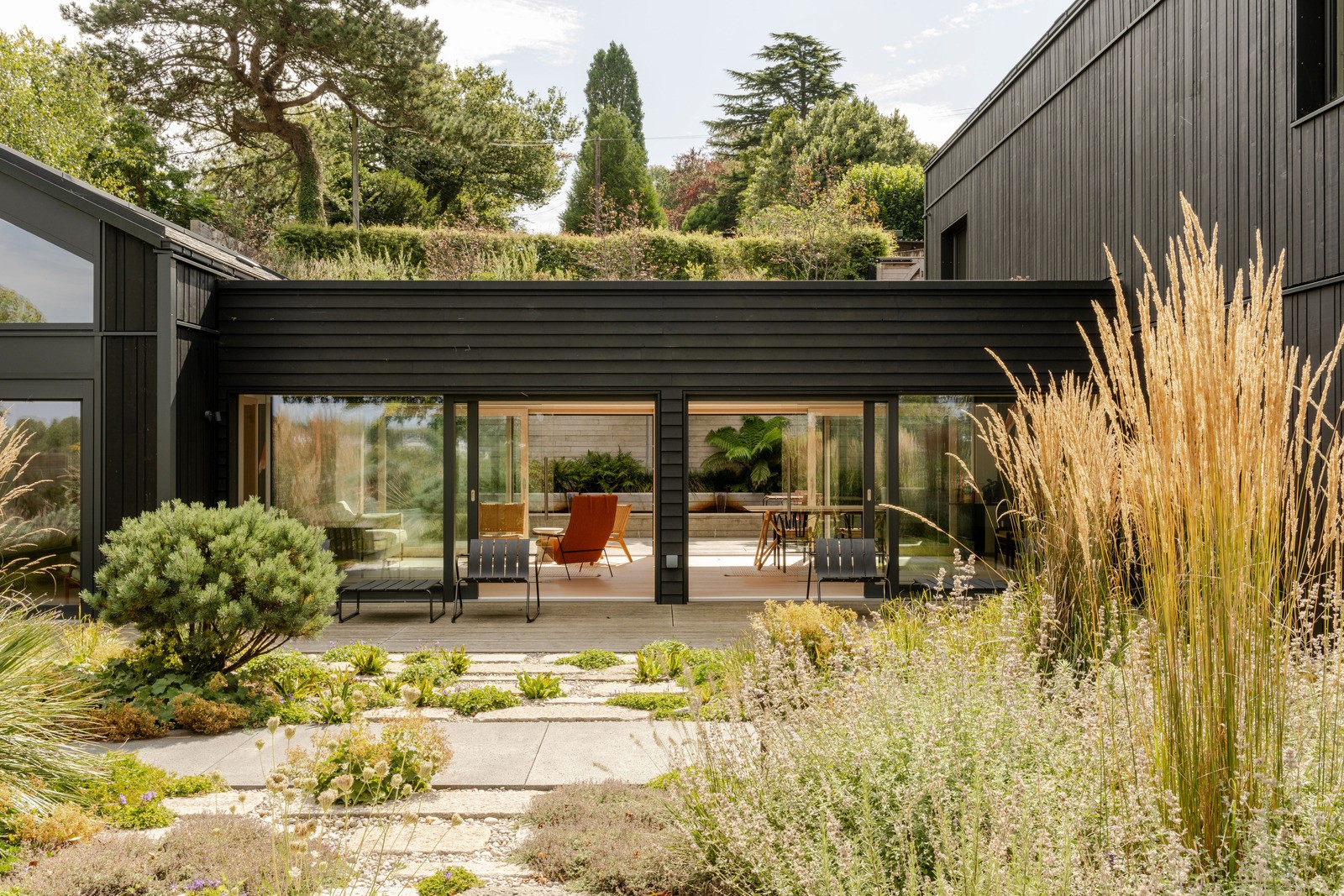
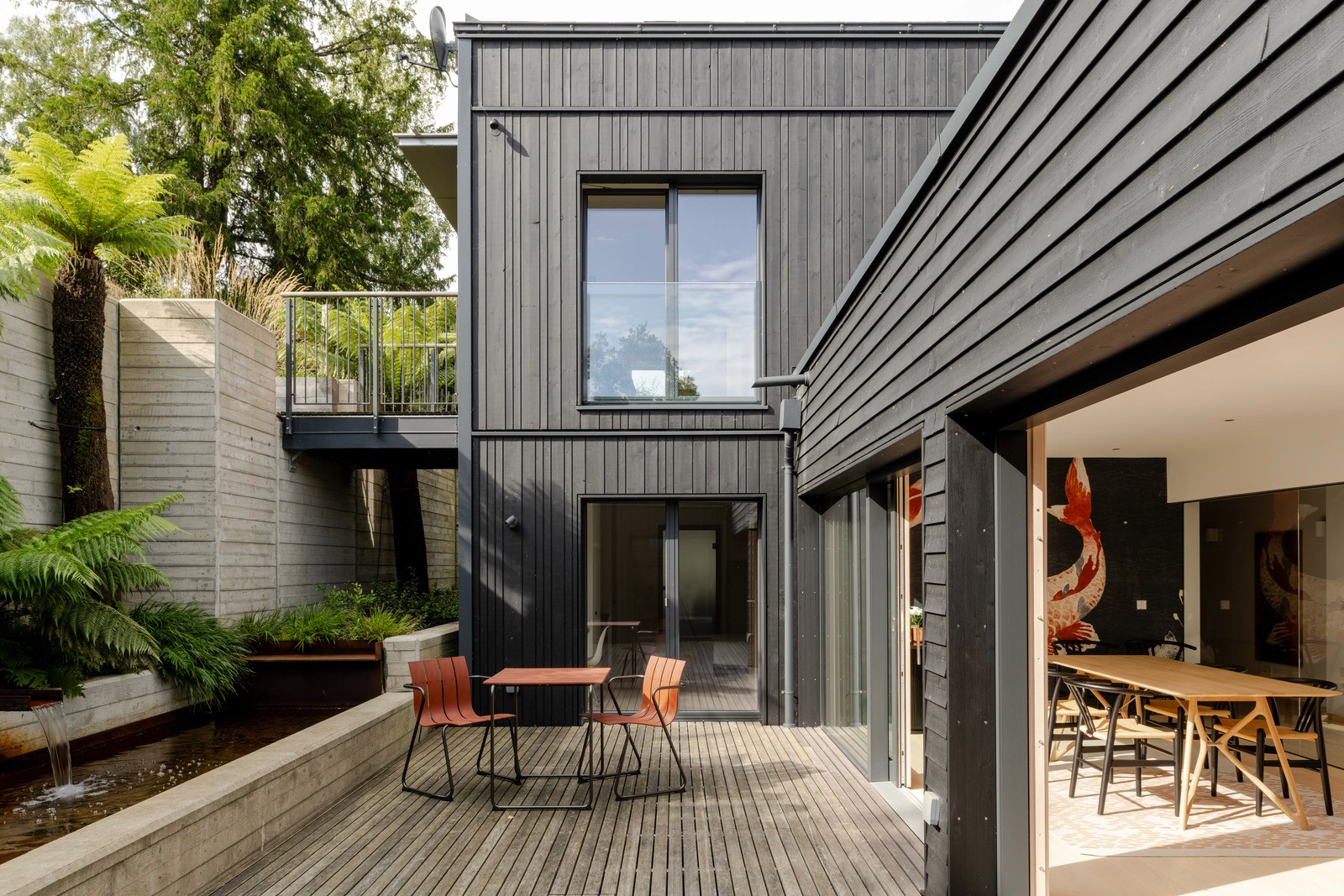
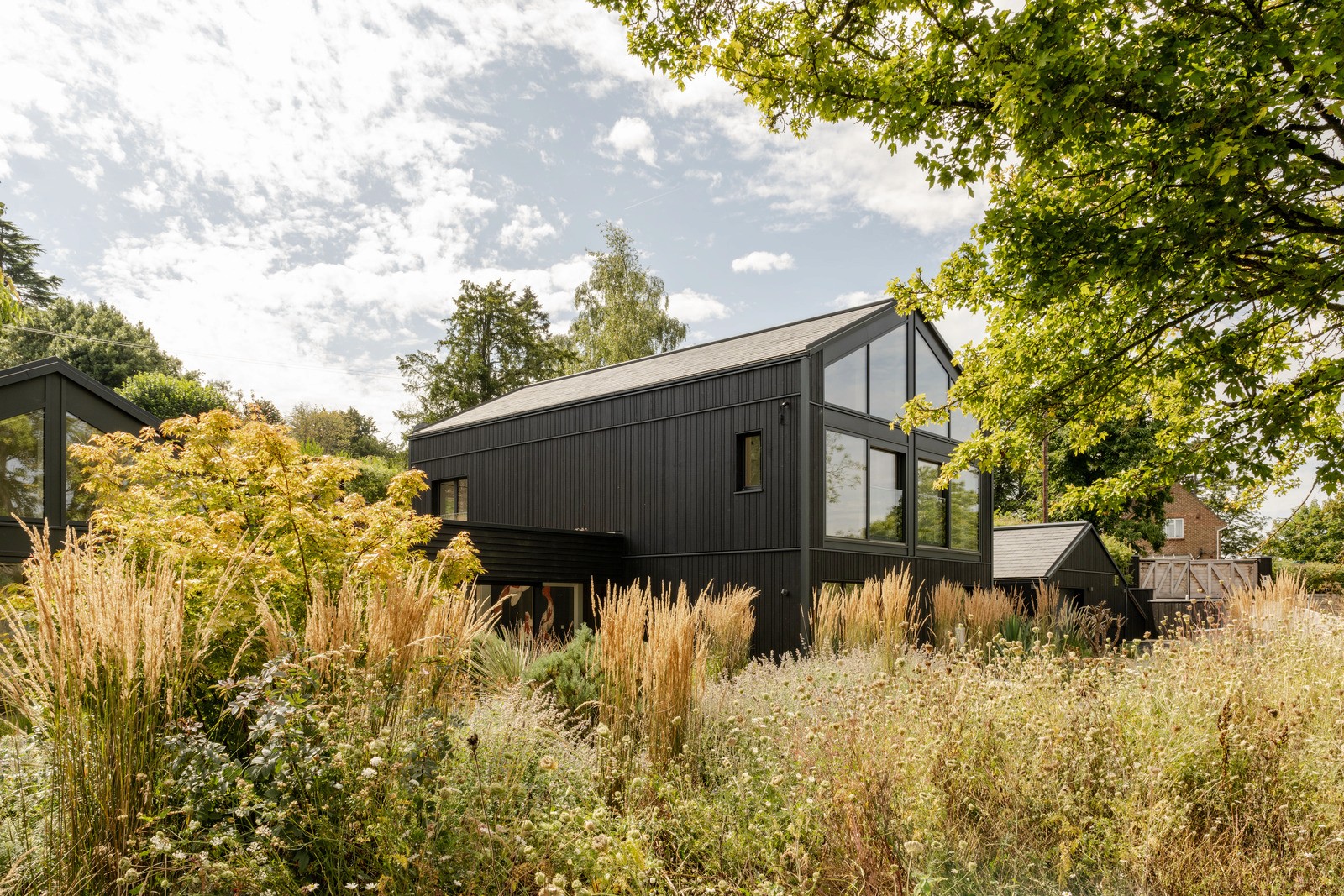
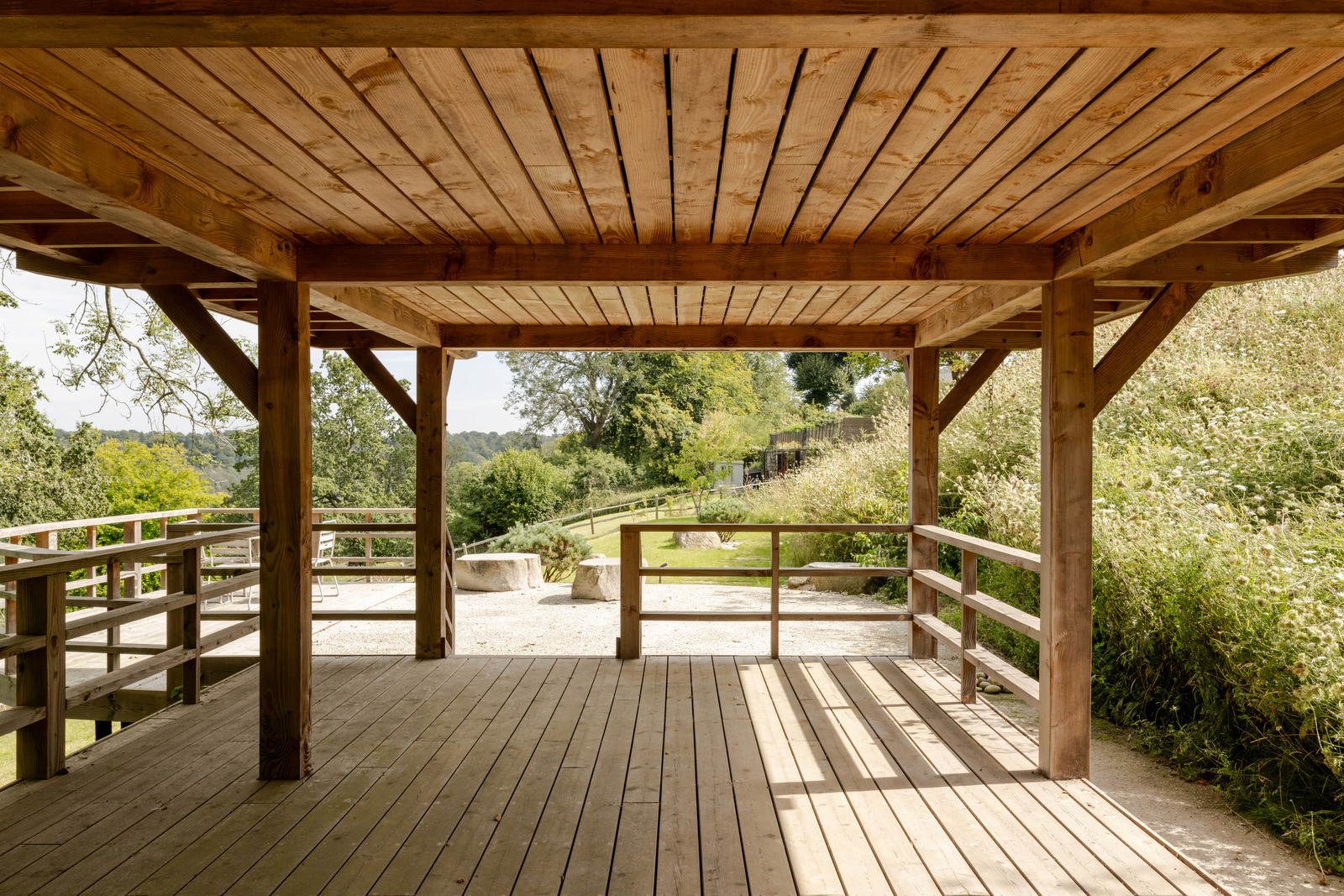
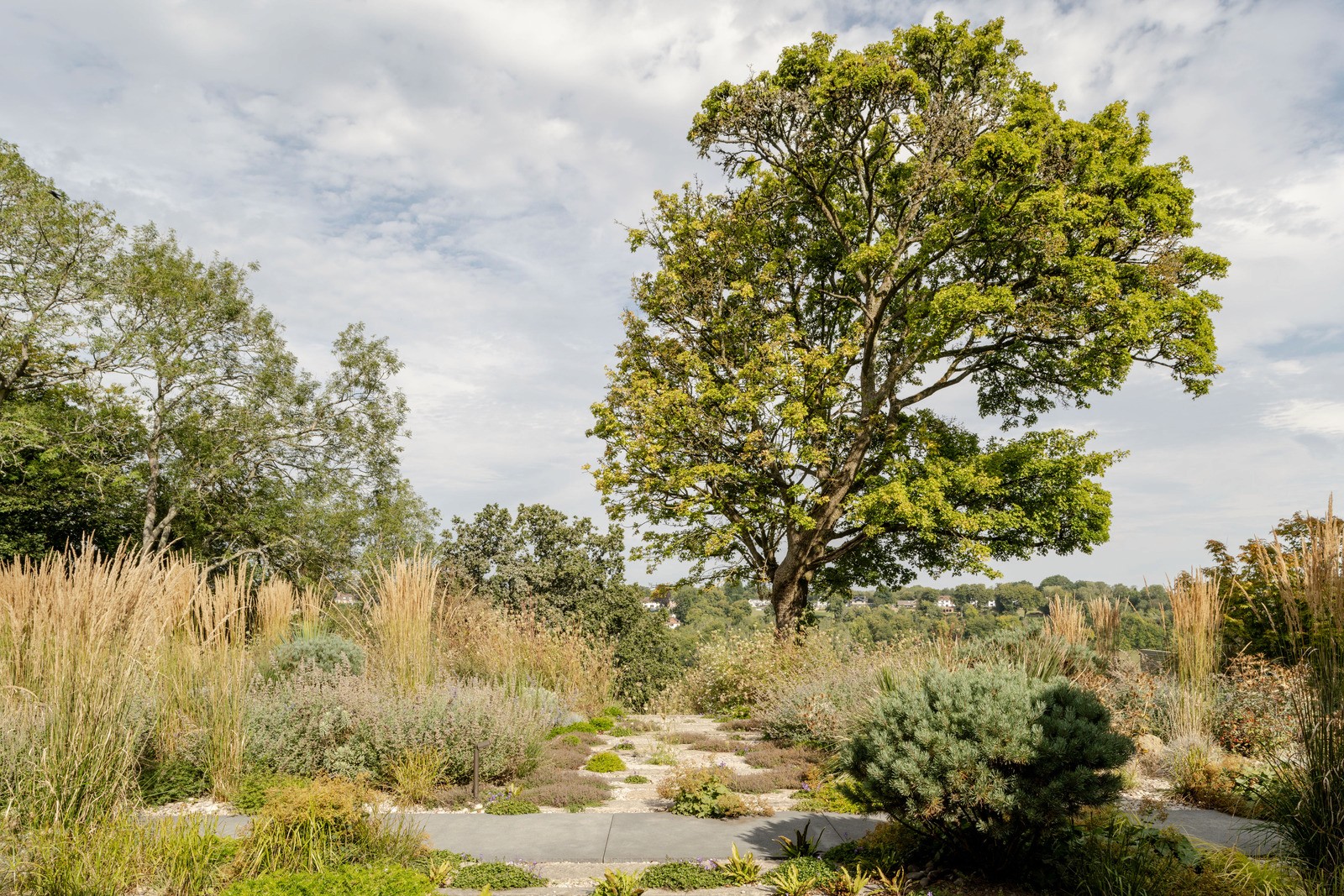
Flint Bay is a combined house and workspace conceived as a broad platform set beneath a canopy of coastal eucalypts. The project is characterised by a clear formal logic, a refined pattern language, and a deliberate economy of means.
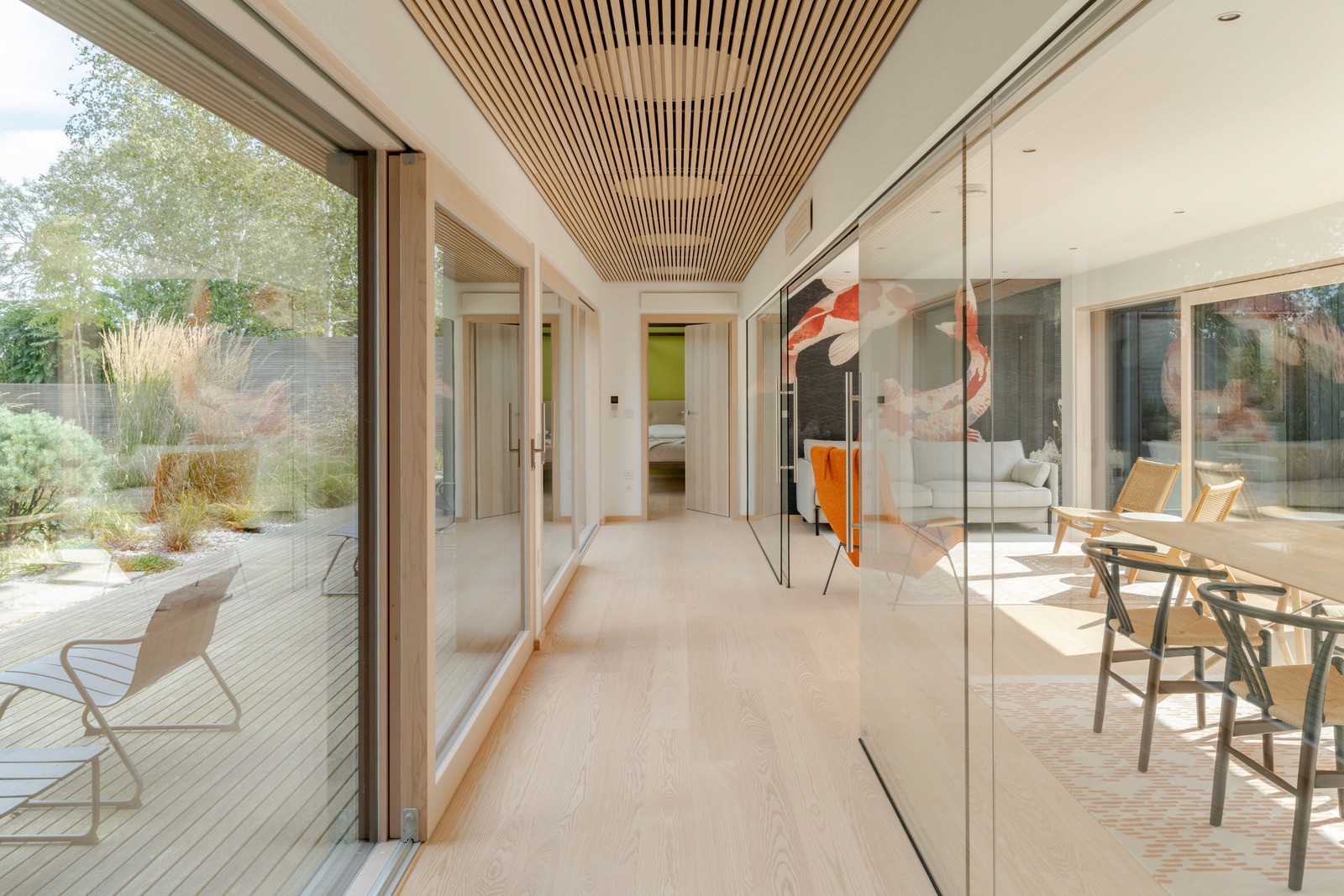
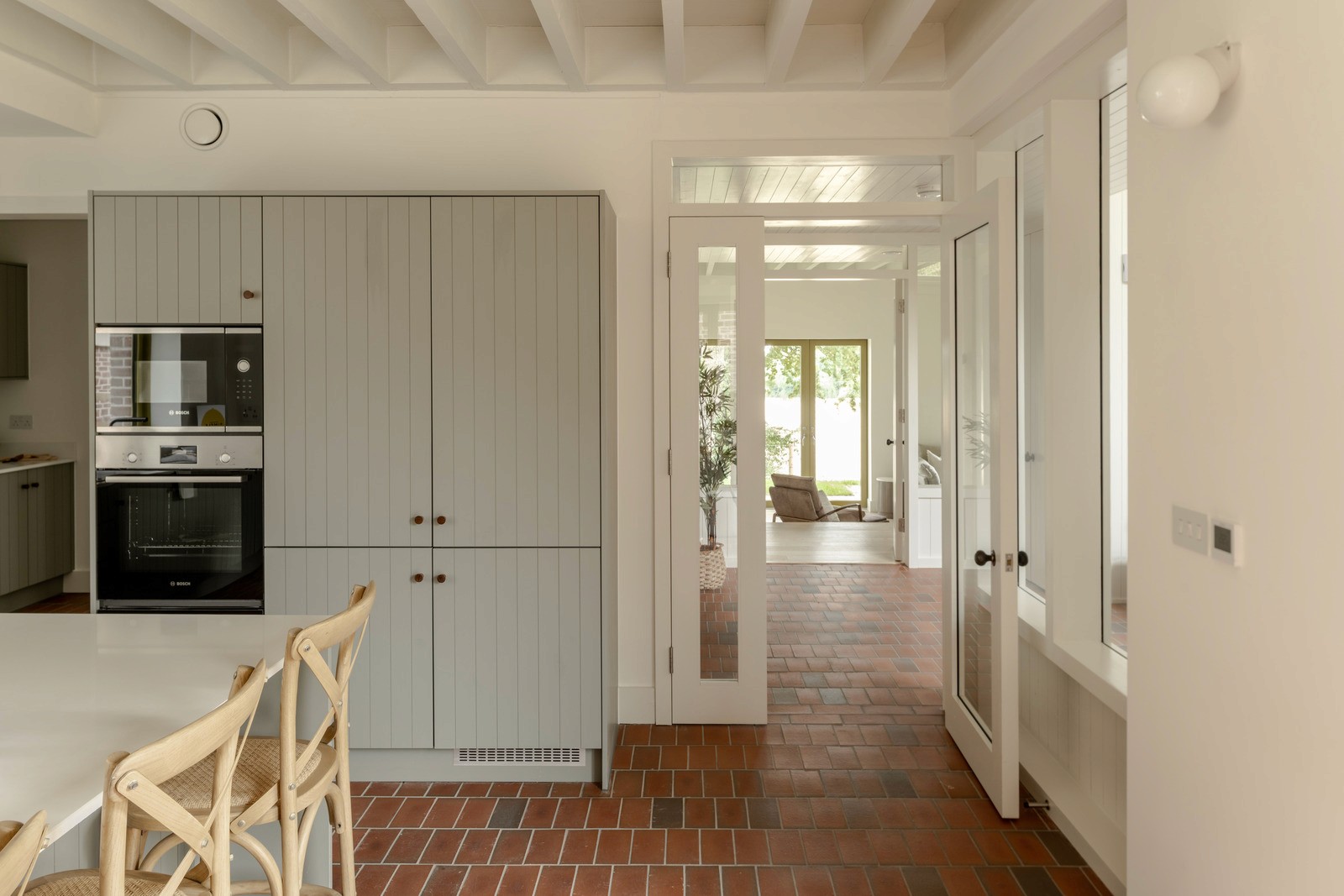
Embedded within and activated by its coastal bushland setting, Flint Bay Studio uses design as a mediator between utility and atmosphere. A layer of operable, permeable timber screens wraps a compact central core that consolidates services and privacy, while allowing circulation to flow freely around it. These screens temper the interior environment, producing spaces that are at once protected and animated — admitting sea air, shifting light, and filtered views in response to the time of day and the position of the screens. This choreography establishes a continual dialogue between the architecture, its occupants, and the elemental conditions of the site. After dark, the richness of the timber structure and linings generates a soft internal glow, lending the building a quiet sense of transparency within the landscape.
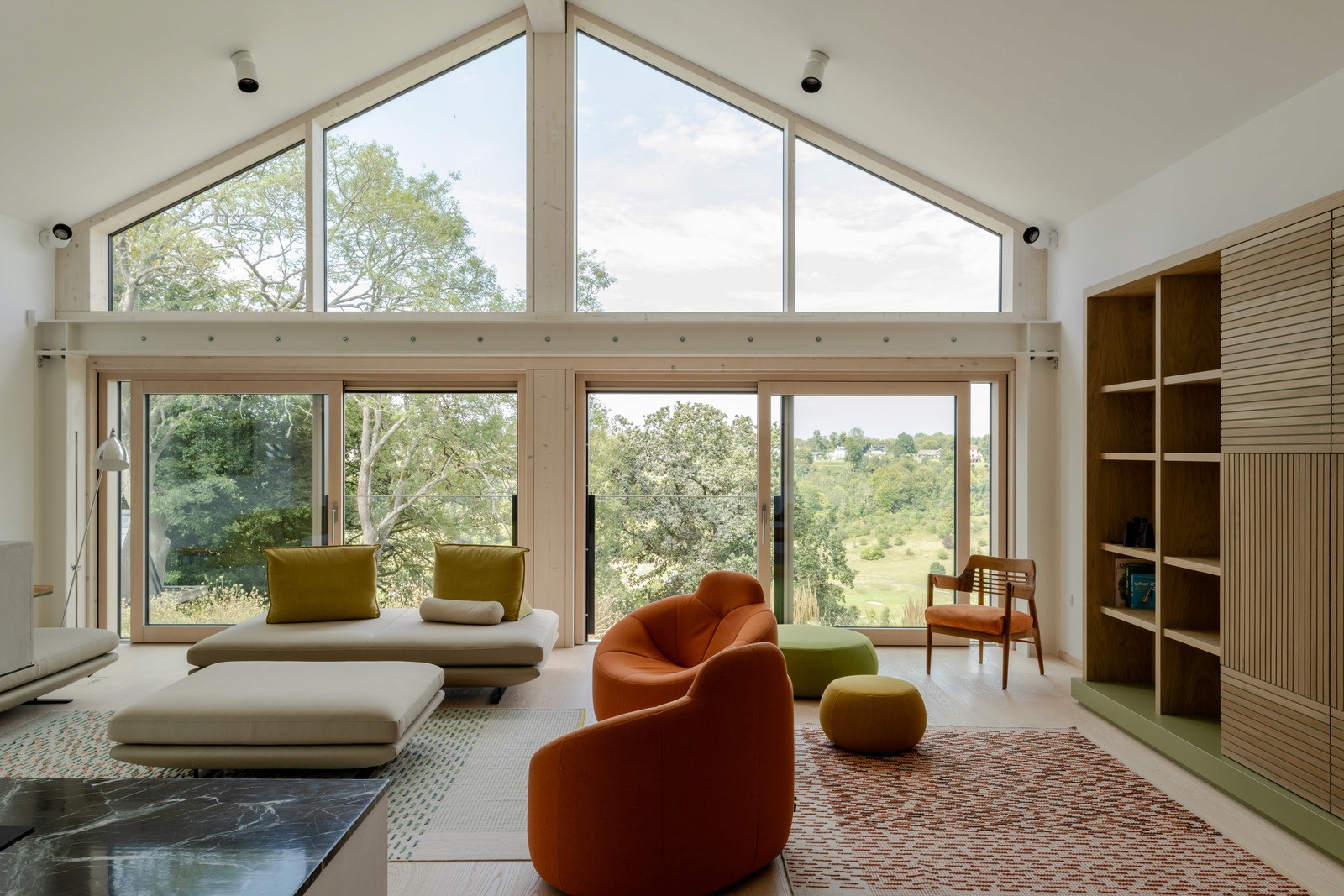
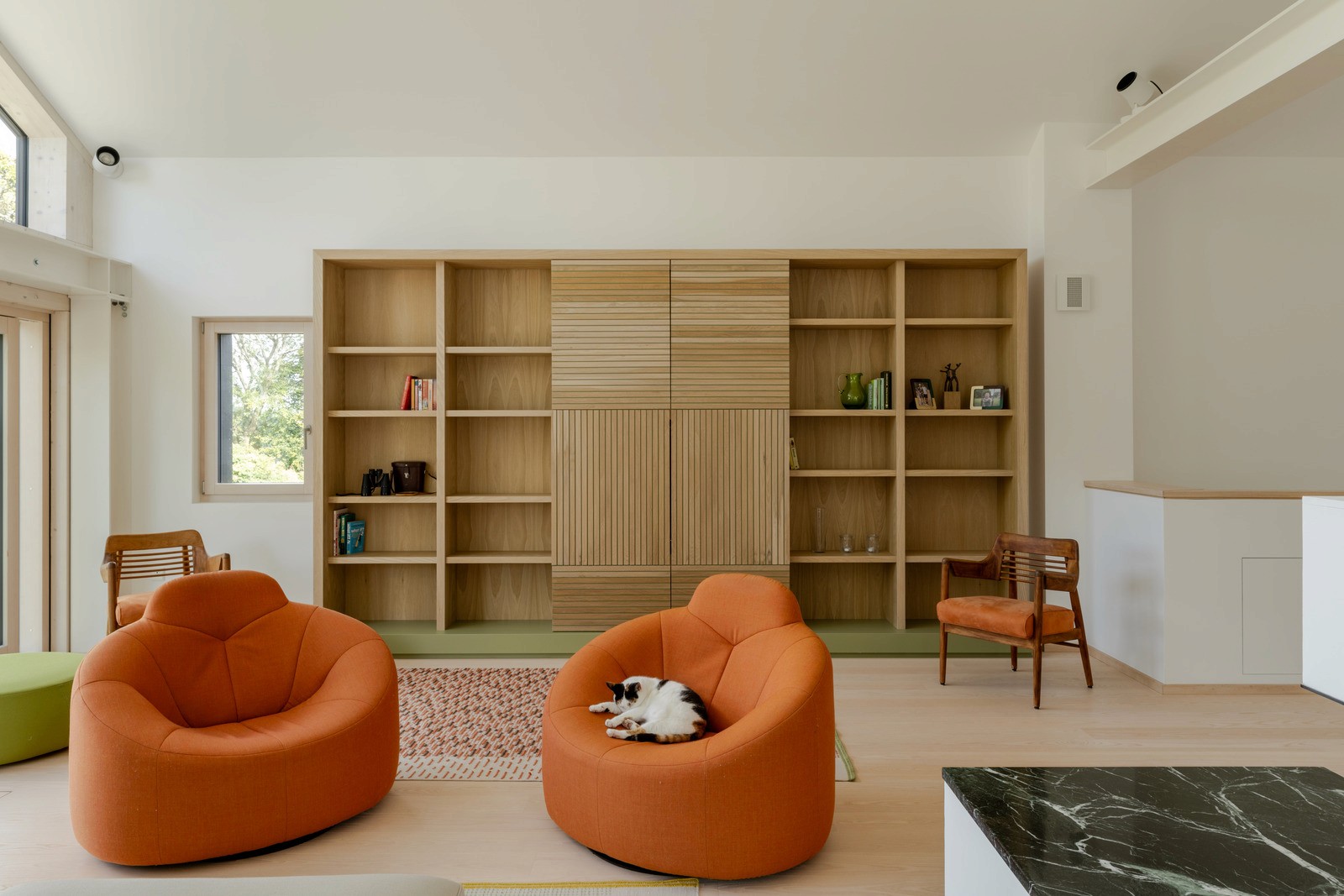
Evoking the experience of inhabiting a raised platform immersed in the bush, the house is perceived as a singular volume capable of being partitioned as required. Spatial organisation remains fluid and adaptable, with use and occupation shaping the environment in real time, resulting in a building that is inherently flexible and responsive to a range of domestic and working modes.
Photography By
Emma Stokes